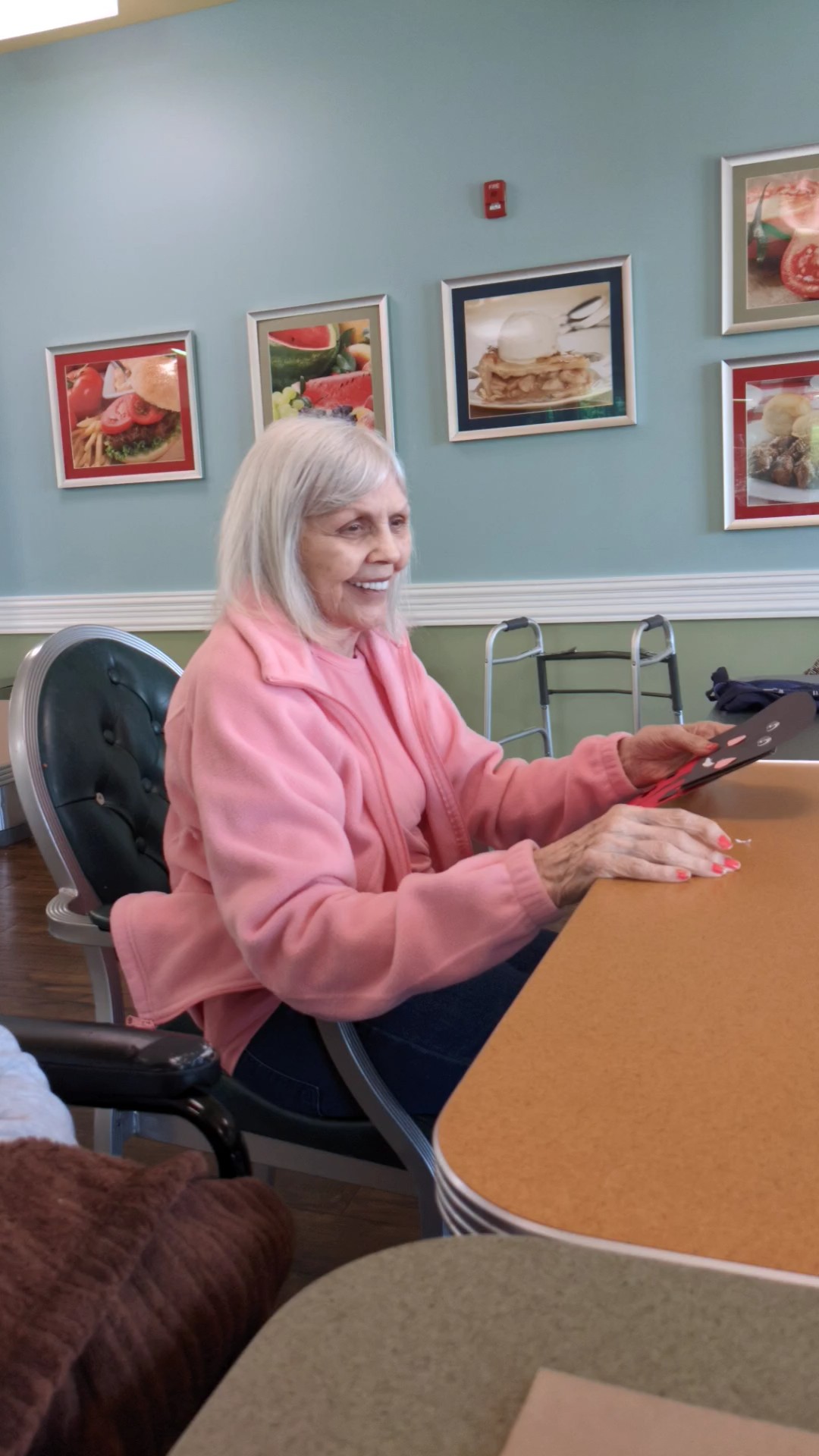
In the picture accompanying today’s blog, which was taken last Tuesday, Linda is obviously happy and at peace; however, this idyllic scene captures only a brief moment in a rapidly changing day. She had been agitated and combative in the early morning, refused to take a shower, and ultimately received only a sponge bath. Shortly thereafter, she greeted her hospice nurse with a hug. During my afternoon visit, when I told her that I loved her, reminiscent of actions she would have displayed years ago, she jokingly kissed her finger and touched it to both sides of her face. Before bedtime, she approached the charge nurse and in a questioning manner said, “Tell me something?” Searching for answers, I will provide a thumbnail sketch of my wife’s past, present, and future.
Past
Linda’s entire life can best be described as a series of relocations, always moving toward a certain destination.
- Child at home to marriage — Growing up as a “preacher’s kid” in Gary, Indiana, she was able to observe life in terms of privations and blessings. Amazingly, she valued the blessings more than she disliked the privations and early on decided that she wanted to marry a preacher. Thankfully, we were married before she actually heard me preach. Otherwise, I would probably not be telling her story!
- One level of faith to another — As we shared life together, her consistent faith was a source of encouragement to me. During times of great victory and overwhelming trials, her belief in the sovereignty of God remained steadfast. I am convinced that her capacity to maintain hope and demonstrate joy was greatly impacted by her childhood knowledge of God, and the modeling of her mother.
- Normalcy to Alzheimer’s — By far, her greatest challenge was accepting that she was a victim of this horrible disease. After seasons of anger and denial, her belief in God’s sovereignty motivated her to begin praying that as long as she lived on this earth her life would manifest the marks of the Kingdom: righteousness, peace, and joy in the Holy Spirit; and, that her descendants might be known for these spiritual values after she was gone.
Present
In the second edition of this three-part series, I indicated that I am making progress in my need to connect my past with my future; for Linda, this is no longer a need or a possibility. With the progression of Alzheimer’s, her memories of the past continue to deteriorate, and the capacity to think in terms of the future is greatly impaired. Ultimately, in this advanced stage, there is only the present, and it will increasingly become a series of jumbled images and patterns. Those of us who love her – and I desperately do – have to accept that one second to the next is all that we can expect!
Inexplicably, her capacity for emotions and affection remains intact. This apparently relates to memory traces that are not easily understood. An instance from one week ago today sheds light on this phenomenon: During a delightful visit in which I expressed my love and she joyfully received it, her caregivers came to take her to the bathroom. Satisfied that I was a capable babysitter, she handed me her baby doll; I have become quite good at providing this service! Shortly after returning, she started crying. When I asked her why she was crying, moving her hands back and forth as if to illustrate, she said, “I can’t figure out which way to go.” There are three possible explanations for her answer:
- Spatial disorientation — She had just moved from a standing/walking position to sitting. Therefore, she could have been physically struggling to determine where she was located in space. In this particular instance, this is most likely the precipitating factor.
- Emotional disequilibrium — All her normal boundaries for evaluating emotional interactions have been permanently thrown off balance. In a matter of minutes, she had moved from delightful banter from me to the mundane affair of toileting.
- Cognitive incongruity — Thoughts that were once in balance are now subject to an unpleasant state of disarray. She has no control over when orderly patterns of thinking are interrupted by a series of jumbled images and patterns resembling static on a radio.
Glorious Future
Since childhood, Linda has been moving toward a certain destination. If she goes before me, I rejoice that I shall see her again:
…we want you to know what will happen to the believers who have died so you will not grieve like people who have no hope. For since we believe that Jesus died and was raised to life again, we also believe that when Jesus returns, God will bring back with him the believers who have died (I Thessalonians 4:13-14 NLT).
 Ron Harvard Ministries