Longtime readers of my blogs have discovered that my life, like theirs, seldom reflects the utopian ideals of freedom from despair, discouragement, and suffering that we might once have believed would accompany our walk with God. In my early twenties, a tumultuous introduction to the Psalms exacerbated my discomfort, which I tried to solve by cherry-picking positive passages that I understood and ignoring the laments. All of that changed in my early thirties when I determined to read all of them, again and again, until I found out why so many great men and women of God spoke of their love for the Psalms. I soon discovered that, unlike anything that I had ever experienced, they allowed me to express my sorrows and disappointments, as well as my elations, in new and exciting ways.
Walter Brueggemann’s insights are applicable: “…the agenda and intention of the Psalms are considerably at odds with the normal speech of most people – the normal speech of a stable, functioning, self-deceptive culture in which everything must be kept young and running smoothly. Against that, the speech of the Psalms is abrasive, revolutionary, and dangerous. It announces that our common experience is not one of well-being and equilibrium, that life is not like that. Life is instead a churning, disruptive experience of dislocation and relocation.”
Wonderful Memories
On May 23, 2024, the first anniversary of Linda’s passing, I carried a beautiful bouquet of flowers to her grave and spent some time reminiscing about the joys — as well as sorrows — we had experienced during nearly sixty years of marriage. After retiring from the pastorate, before Alzheimer’s rendered her incapable of participating, she and I spent a significant amount of time developing a more intimate relationship with Christ, defining the core values of our lives, and prayerfully interceding for our children, grandchildren, and descendants who were yet to be born. After her death, I once again turned to the prayer book of the early Church until I was able to see her suffering and death in light of God’s eternal knowledge:
You made all the delicate, inner parts of my body and knit me together in my mother’s womb. Thank you for making me so wonderfully complex! Your workmanship is marvelous—how well I know it. You watched me as I was being formed in utter seclusion, as I was woven together in the dark of the womb. You saw me before I was born. Every day of my life was recorded in your book. Every moment was laid out before a single day had passed (Psalm 139:13-16 NIV).
Unfolding Reality
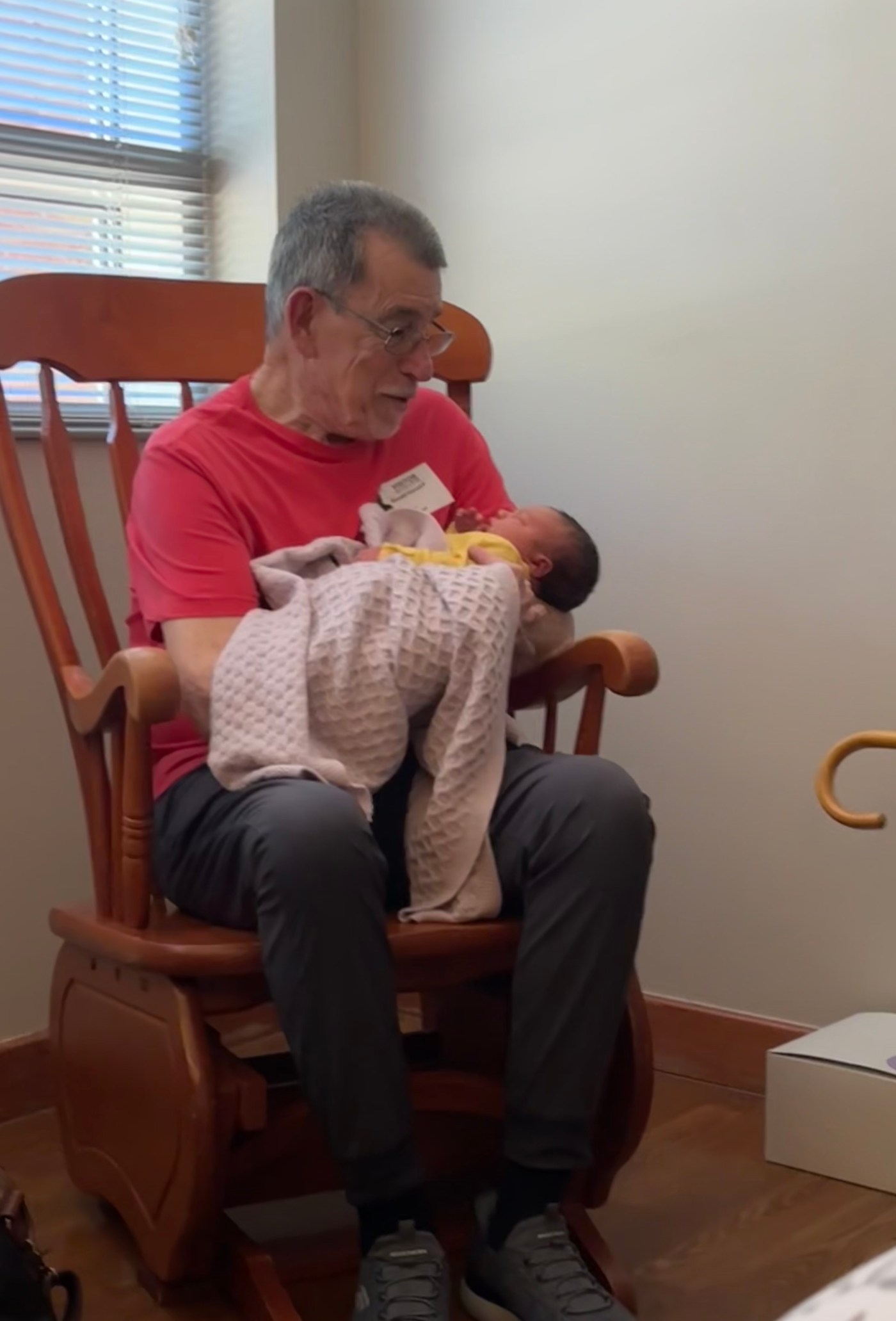
As May 23, 2025, drew near, I, creature of habit that I am — and failing to remember that life is a churning, disruptive experience of dislocation and relocation, planned a redo of last year. I was in for a big surprise! The picture accompanying today’s blog was taken on May 17, 2025. I am holding one-day-old Madison Fay Collins, our newest great-grandchild. I enjoy imagining her great-grandmother Linda Fay Johnson, looking down from Heaven at our growing family. Madi, along with her, by fifteen months, older brother and four cousins, wonderfully illustrate “descendants who were yet to be born.” Our growing family serves as a constant reminder to me that I must balance the wonderful memories of past joys with the unfolding reality that is presently being revealed. Despite a few stumbles, on most days the promise of the warmth ahead is greater than the memories of the coldness of my grief.
Cry of my Heart
As I grow in my relationship with Christ, The Holy Spirit is creating within me an increasing desire to be as saturated with the Psalms as the New Testament writers were. Again, I find Walter Brueggemann’s insights to be of great value: “It is clear that the Psalms, when we freely engage ourselves with them, are indeed subversive literature. They break things loose. They disrupt and question. Most of all, they give us new eyes to see and new tongues to speak. Therefore, we need not enter the presence of the Holy One mute and immobilized. We go there to practice our vocation of receiving the new future God is speaking of to us. To risk such prayer is to repent of the old orientation to which we no longer belong. It is to refuse to remain in the pit – which must first be fully experienced – for the sake of the wings, which may be boldly anticipated.”
How precious to me are your thoughts, God! How vast is the sum of them! Were I to count them, they would outnumber the grains of sand – When I awake, I am still with you. (Psalm 139:17-18 NIV).
 Ron Harvard Ministries